
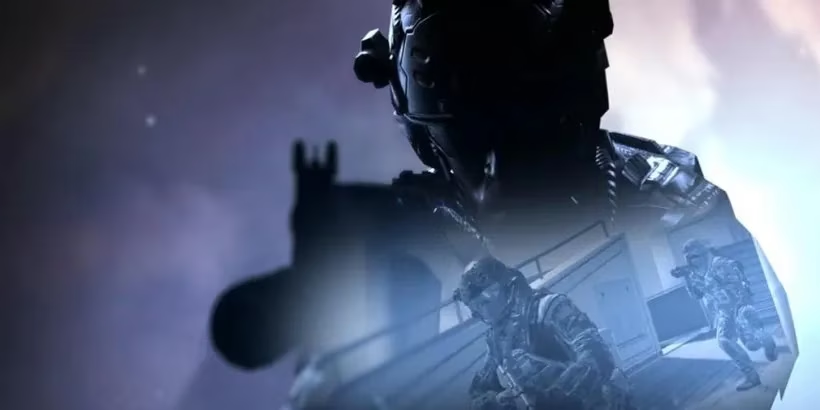
The 2019 Game Awards handed its Best Mobile Game trophy to Call of Duty: Mobile, and in 2026 that decision still lingers like a bad aftertaste for many mobile gaming observers. At the time, the win struck critics as one of the few genuinely baffling calls in an otherwise passable ceremony. It was not that Activision's shooter was a bad game—it was not. It was that the jury appeared to shrug at a year packed with bold, strange, and deeply human mobile experiences, then hand the crown to the safest possible pick. Call it a tone-deaf choice, a missed opportunity, or simply the moment the awards showed their mainstream bias. Either way, the debate has not gone away.
Fast-forward to 2026, and the mobile landscape looks even more different. Apple Arcade and Google Play Pass are no longer shiny new toys; they are established pipelines. Netflix Games has become a serious player, cloud streaming has matured, and premium indies now routinely launch day-and-date on phones. The idea that mobile is only for free-to-play shooters and gacha is, thankfully, harder to defend. Yet the 2019 result remains a useful case study in how awards bodies can miss the forest for the trees.
🎮 Why the 2019 mobile lineup was stacked
Even without Apple Arcade, 2019 would have been a banner year. February brought The Stillness of the Wind, a humane and affecting title that achieved its power through deliberately unconventional gameplay and genuine empathy for its challenging protagonist. April delivered Distraint 2, a brutal odyssey into the wider impact of individual survival inside a system that makes dehumanisation easy. Photographs also arrived that month, using mobile devices to tell uncomfortable, illuminating tales.

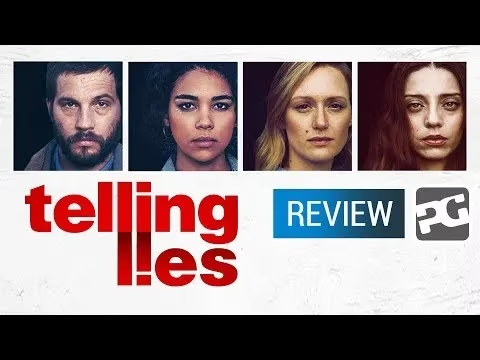
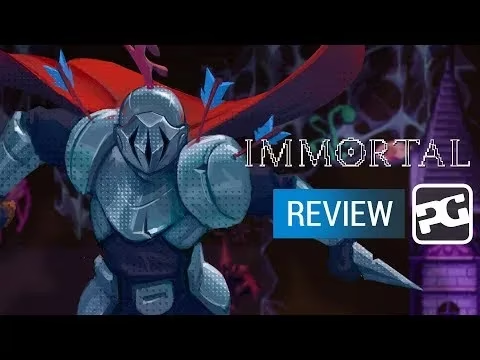
May introduced Ordia, the one-finger flinger, a more traditional mobile experience with a central mechanic it explored to the fullest. Immortal Rogue nailed refined, mobile-friendly gameplay and offered one of the best roguelike loops of the year on any platform. Later came Telling Lies, Sam Barlow's discomforting detective thriller. It was a well-reviewed follow-up to one of the most acclaimed indie games of the decade, boasting terrific performances from recognizable Hollywood talent and a compelling, twisty, personal tale of paranoia. Somehow, it did not even earn a nomination. For many, that omission was the writing on the wall.

🏆 The other nominees were no slouches
The other 2019 nominees included What the Golf?, Grindstone, Sky: Children of Light, and Sayonara Wild Hearts. All great games, all deserving winners. A table helps show the breadth of that field:
| Title | What it brought to mobile |
|---|---|
| Call of Duty: Mobile | Polished FPS action, huge IP, mainstream appeal |
| What the Golf? | Absurdist physics comedy with a killer hook |
| Grindstone | Sharp puzzle-battler loop and gorgeous style |
| Sky: Children of Light | Emotional social exploration |
| Sayonara Wild Hearts | Pop-music arcade rush |
| Telling Lies (snubbed) | Interactive detective drama with real star power |
😬 Why the win felt half-assed
None of this is to say COD: Mobile is a bad game. It is not. It is a competent, content-rich shooter that brought a console-style experience to phones and built a massive audience. But awards are not supposed to be a popularity contest—or at least, they are not supposed to look like one. In a year of genuinely interesting alternatives, the jury's decision felt half-assed, as if it had defaulted to the biggest name rather than the most interesting work. The loss was doubly frustrating because other categories—Best Narrative, Best RPG, and especially Best Independent Game—continued to make strides forward. Mobile, by contrast, seemed stuck in the shallow end.
📺 The Game Awards as an extended ad?
Nobody, besides a few very online critics, takes the Game Awards completely seriously. Every year, the recurring joke is that the show is an extended advertisement, and over time that joke has become truer. During what is supposed to be gaming's biggest night of the year, asking for better is fair. The 2019 mobile category was not a case of apples and oranges; it was a case of a stacked deck being ignored. If the awards want to be taken seriously in 2026, they need to recognize that mobile is not a consolation prize. It is where some of the most inventive, accessible, and emotionally resonant work in the medium now lives.
🔮 What 2026 should learn
By 2026, the mobile gaming audience is bigger than ever, and the quality ceiling keeps rising. Subscription services have funded small developers, premium ports have found new life, and cross-platform releases have made the phone a first-class gaming device. The old excuse—that mobile is somehow lesser—no longer holds water. The 2019 Game Awards result is a reminder that prestige bias dies hard. It also explains why so many players still roll their eyes when a blockbuster takes home a mobile trophy over a smaller, stranger, more daring title. The industry can do better. The jury can do better. And the audience, frankly, deserves better.
Loading comments...